Cracking down on illegal robocalls When an unfamiliar number appears on your phone, chances are you hesitate before answering – I know I do. It’s an understandable reaction considering Americans received an estimated 4.3 billion robocalls last month alone. The sheer volume is staggering, and the illegal robocall scams are costing consumers an average of $25 billion every year.This is an issue I’m familiar with. I previously worked through the Energy and Commerce (E&C) Committee to advance two pieces of legislation, including the Stopping Bad Robocalls Act and the bipartisan Combating Pandemic Scams Act, which President Trump signed into law to help Americans identify and report telemarketing, internet, and robocall fraud.These calls are annoying, and criminals effectively use them to steal identities, drain bank accounts, and prey on seniors and other vulnerable Americans. We’re distrusting our phones more and more, causing people to ignore legitimate calls from doctors, schools, and even family members.On July 22, the House E&C Committee’s Communications and Technology Subcommittee held a hearing to examine how Congress can better protect Americans from illegal robocalls and strengthen our communications networks.A proposal before the Subcommittee was the bipartisan Foreign Robocall Elimination Act. It would unite federal agencies and industry experts to identify the origins of foreign scam calls, trace criminals, assess damage, and prevent more calls from entering American networks.Good data informs good policy, and Congress must work to ensure commonsense legislation that should give federal officials the tools necessary to catch scammers. But we need to ensure the solution does not create new burdens for legitimate callers that follow the rules.But as technology continues to evolve and scammers look for new ways to exploit people, it’s up to Congress to keep pace with commonsense protections that safeguard consumers.
Representative Buddy Carter
Home  |   Meet Buddy  |   Services  |   Newsroom  |   Issues  |   Legislation  |   Recent Votes  |   Connect
 

Cracking down on illegal robocalls


When an unfamiliar number appears on your phone, chances are you hesitate before answering – I know I do. It’s an understandable reaction considering Americans received an estimated 4.3 billion robocalls last month alone. The sheer volume is staggering, and the illegal robocall scams are costing consumers an average of $25 billion every year.


This is an issue I’m familiar with. I previously worked through the Energy and Commerce (E&C) Committee to advance two pieces of legislation, including the Stopping Bad Robocalls Act and the bipartisan Combating Pandemic Scams Act, which President Trump signed into law to help Americans identify and report telemarketing, internet, and robocall fraud.


These calls are annoying, and criminals effectively use them to steal identities, drain bank accounts, and prey on seniors and other vulnerable Americans. We’re distrusting our phones more and more, causing people to ignore legitimate calls from doctors, schools, and even family members.


On July 22, the House E&C Committee’s Communications and Technology Subcommittee held a hearing to examine how Congress can better protect Americans from illegal robocalls and strengthen our communications networks.


A proposal before the Subcommittee was the bipartisan Foreign Robocall Elimination Act. It would unite federal agencies and industry experts to identify the origins of foreign scam calls, trace criminals, assess damage, and prevent more calls from entering American networks.


Good data informs good policy, and Congress must work to ensure commonsense legislation that should give federal officials the tools necessary to catch scammers. But we need to ensure the solution does not create new burdens for legitimate callers that follow the rules.


But as technology continues to evolve and scammers look for new ways to exploit people, it’s up to Congress to keep pace with commonsense protections that safeguard consumers.


Buddy’s Briefing


On this week's edition of Buddy's Briefing, we break down the FDA Modernization Act 3.0, a bipartisan bill that embraces modern scientific alternatives to reduce unnecessary animal testing. Tune in to learn how this legislation supports innovation while protecting patient safety.


play button


From Our Nation’s Capitol


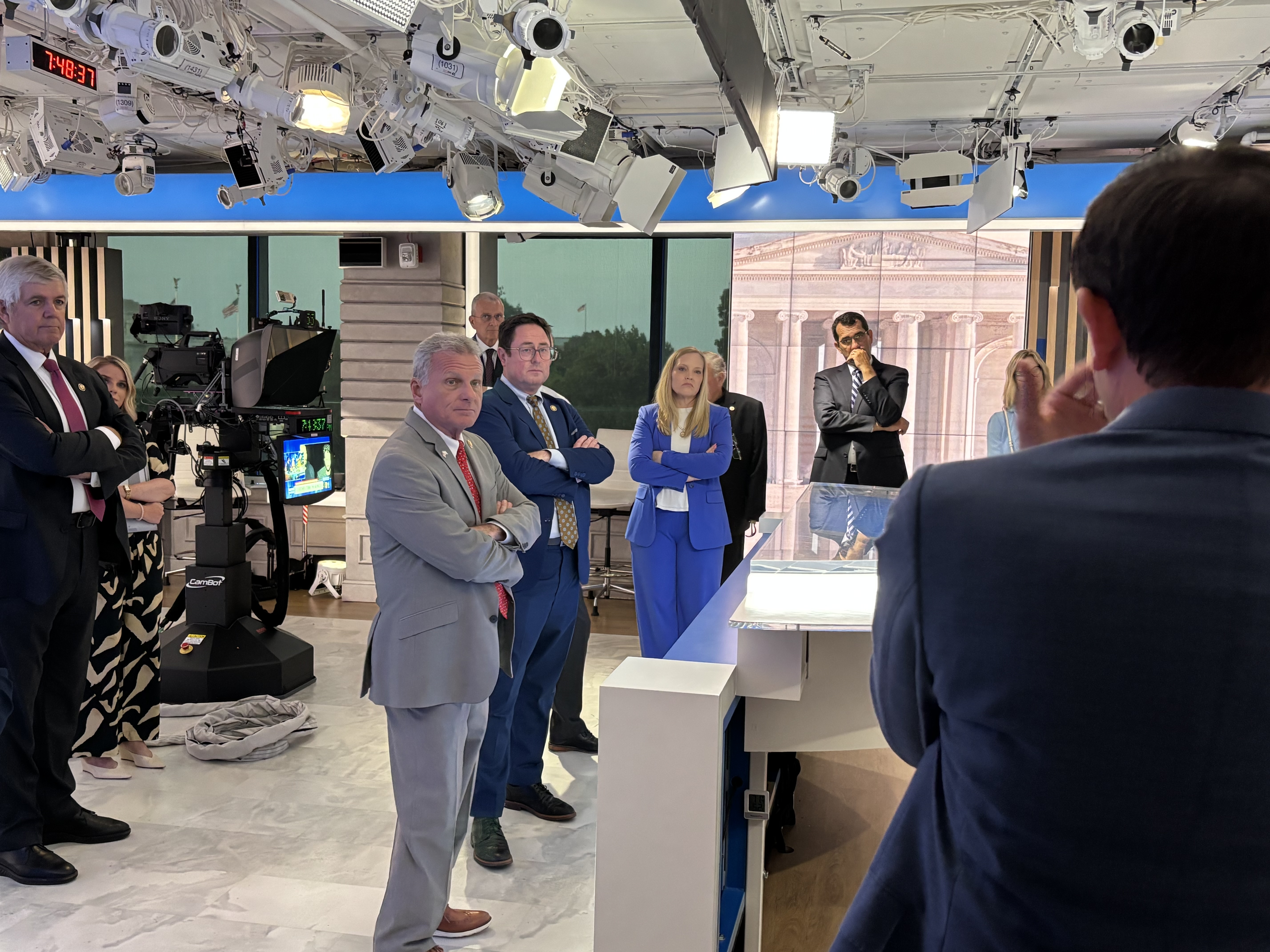
Monday, July 20, 2026: On Saturday, I had the privilege of speaking at the Ducks Unlimited annual business meeting held on St. Simons Island in Glynn County. As the nation’s largest nonprofit organization dedicated to conserving, restoring and managing wetlands and habitats for our country’s waterfowl, Ducks Unlimited provides a great service to our environment. They have led the effort to conserve millions of acres of habitat while supporting outdoor recreation, hunting, water quality and flood resilience. After our all staff conference call this morning, I head to the Jacksonville airport for my return flight to Washington, and once back on Capitol Hill, I head straight to the House Chamber where I speak during debate on H.R. 2821, the FDA Modernization Act 3.0. This is legislation I am sponsoring that requires the Food and Drug Administration (FDA) to update its rules by replacing references to animal testing with broader nonclinical testing methods. Afterwards, I head to our office where I have a series of meetings with staff including with legislative staff, communications staff, our Chief of Staff, our district staff and then our scheduling staff. Next, I film this week’s edition of Buddy’s Briefing before heading to an Energy and Commerce (E&C) full committee mark up where we have opening statements, then recess with the intention of reconvening tomorrow. After attending our weekly Whip Team meeting, I head to the House Chamber for our first vote series of the week and afterwards pay tribute to Norcross Police Officers Gabriel Veras, Jr. and Carin Elmore whose outstanding work saved a three-year-old in cardiac arrest. Next, I head to the studios of NewsNation/Nextstar/The Hill Washington Bureau where I join members of the Republican Main Street Caucus for a tour of the facilities.


Rep. Carter visits the NewsNation Bureau


Tuesday, July 21, 2026: This morning I attend a Meet the Cabinet series in the Capitol where we hear from Department of Homeland Security (DHS) Secretary Markwayne Mullin from Oklahoma who is doing an outstanding job since being appointed earlier this year. Markwayne is one of my best friends in Washington and I am very proud of his success as a House member, Senate member and now as a Cabinet Secretary. After our weekly GOP Conference, I head to the continuation of our E&C markup that began with opening statements yesterday afternoon. We begin the mark up at 10:00 AM this morning and it lasts until 4:30 PM as we debate and vote on 17 pieces of legislation and numerous amendments. The only break we have during the markup is when we briefly suspend our meeting early this afternoon for a vote series. Afterwards, I meet with a constituent before filming a series of Buddy’s Briefings that we will post during August. Next, I head to the Library of Congress (LOC) for a Congressional Crossroads series featuring Michael Auslin on his new book, National Treasure: How the Declaration of Independence Made America. Afterwards, I head to the House Chamber where I speak on two amendments that I am sponsoring to the National Defense Authorization Act (NDAA) and then remain in the Chamber for our second and final vote series.


Rep. Carter Speaks at Energy & Commerce Committee


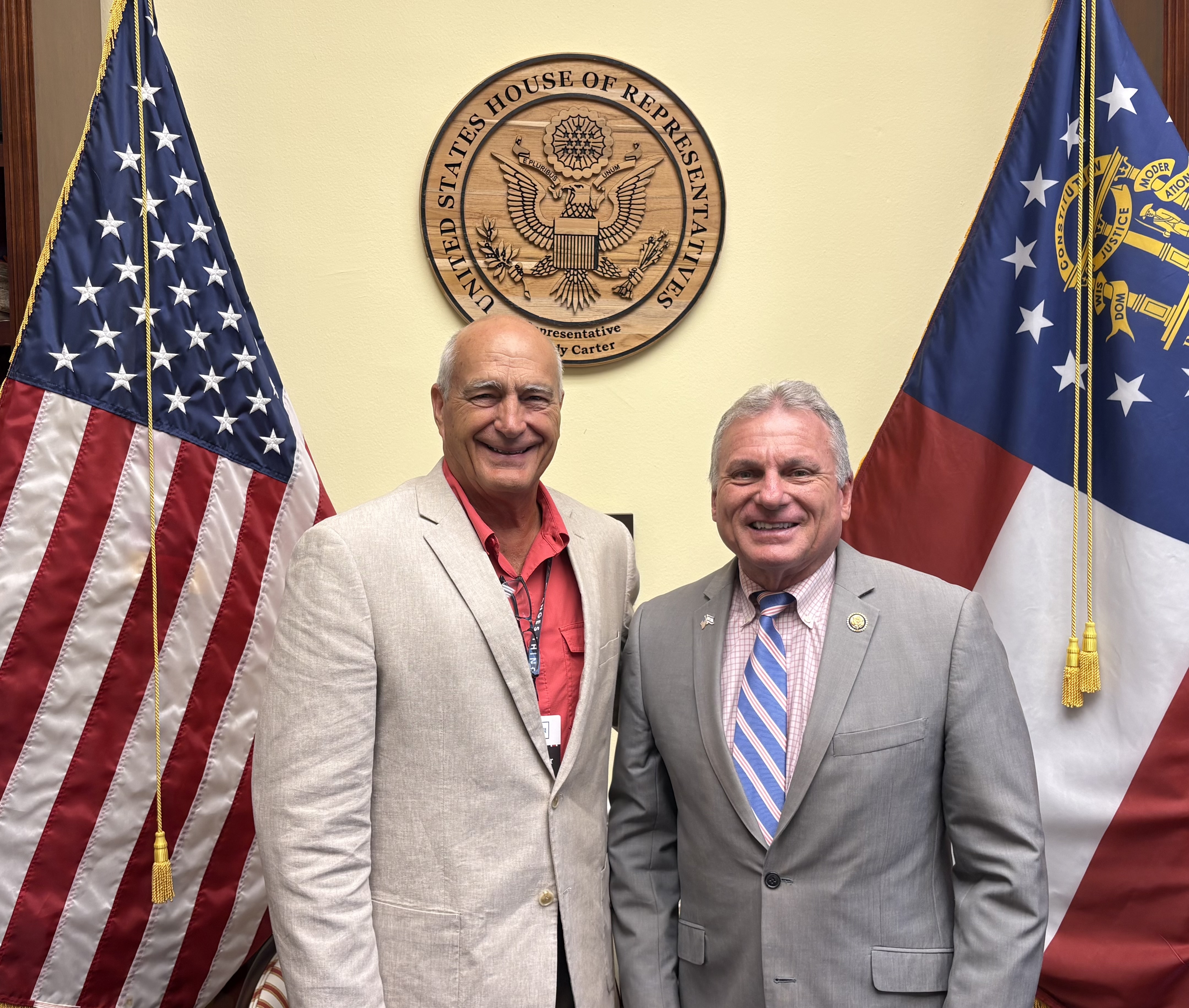
Wednesday, July 22, 2026: I’m live on Newsmax this morning as we discuss the Iran conflict, Save America Act, and other news of the day before heading to another Meet the Cabinet Series featuring Secretary of Commerce Howard Lutnick. Once back in our office, I meet with my good friend, Joe Fowler, with Common Thread Ministries, who is one of my prayer warriors who offers me encouragement and who I much appreciate. Next, I have a series of meetings in our office beginning with the Georgia Association of Manufacturers, followed by the Georgia Trucking Association, and the Institute for Legislative Analysis. After meeting with Magnus Medical, a U.S. based neurotechnology company, I head to the House Chamber where I speak during debate of the Reconciliation 3.0 resolution that we passed out of the Budget Committee last week. Next, I head to an E&C Telecom Subcommittee hearing on broadband and national security bills before heading to the Senate side of the Capitol to meet with the Chair of the Health, Education, Labor and Pensions (HELP) committee, Sen. Bill Cassidy (R-LA). Once back on the House side of the Capitol, I have a live interview on CNN to discuss the Iran conflict and other news of the day before heading to the House Chamber for our first vote series of the day. Next, I head off Capitol Hill for another meeting with the Georgia Association of Manufacturers followed by a meeting with the Conservative Climate Caucus. Later, I return to the House Chamber where I have a special order and pay tribute to constituents and groups throughout the State. 


Rep. Carter meets with Joe Fowler


Thursday, July 23, 2026: After our weekly GOP Doctor’s Caucus meeting where we hear from researchers from Eli Lilly on their progress with Alzheimer’s disease, I head to an E&C member meeting to discuss our agenda for the rest of the year. Next, I head to the House Chamber for our final vote series of the week and before we begin our August district work period. After meeting with a constituent in our office, I head to the airport and travel to Dallas, TX, where I am speaking at the Energy Investors Forum (EIF) this afternoon. EIF is sponsored by TheEnergyMag, and is a conference focused on the intersection of energy, compute, and capital. The discussion involves executives, investors, data center operators and infrastructure providers and concentrates around power, AI infrastructure and energy-intensive computing. 


Rep. Carter finishes last meetings of the week


Tributes


I’m proud to recognize the incredible individuals, celebrate special moments, and honor the legacies of those we’ve lost across Georgia’s First District, throughout our great state, and among those whose connections to our communities continue to enrich the lives of Georgians everywhere.


  1. Matthew Ledbetter
  2. Norcross Officers Gabriel Veras Jr. and Carin Elmore
  3. Darlyn Martin
  4. Georgia Library Service
  5. Church of Christ Holiness - Savannah
  6. Tracy Crihfield
  7. Trish DePriest
  8. Scott Sweeney
  9. Parker’s Kitchen


Did You Know?


Georgia is home to more than 400,000 veterans, whose continued service and leadership strengthen communities across the Peach State and reflect Georgia's proud military tradition.


Votes In The House This Week


Click here to see this week's vote sheet in the House of Representatives.

 
Washington, DC Office
2432 Rayburn HOB
Washington, DC 20515
Phone: (202) 225-5831
Fax: (202) 226-2269
Brunswick Office
777 Gloucester Street
Suite 410
Brunswick, GA 31520
Phone: (912) 265-9010
Fax: (912) 265-9013
Savannah Office
6602 Abercorn Street
Suite 105B
Savannah, GA 31405
Phone: (912) 352-0101
Fax: (912) 352-0105
 
Congressman Buddy Carter. Georgia's first district
 
facebook icon  twitter icon  instagram icon  youtube icon
 
 
Website |  Unsubscribe |  Contact