THE PRICE OF PROGRESS SHOULDN’T BE YOUR POWER BILL Artificial intelligence is transforming the way America works, competes, and innovates, and Georgia is right in the middle of that growth. But as new data centers come online and demand enormous amounts of electricity, families and small businesses should not automatically be handed the bill for somebody else’s expansion.That is why I was proud to cosponsor the bipartisan Ratepayer Protection Act, which passed the House this week by an overwhelming vote of 417–3.The idea behind this legislation is simple: When a massive data center creates the need for new power generation, transmission lines, substations, or other electric infrastructure, state utility regulators should consider standards designed to ensure those additional costs are paid by the companies creating the demand rather than shifted onto everyday ratepayers.And nowhere is that conversation more important than right here in Georgia.Earlier this month, Governor Brian Kemp announced that Georgia attracted a record $35.2 billion in economic development investment during Fiscal Year 2026, with projects expected to create approximately 25,300 private-sector jobs in the years ahead.That is an extraordinary amount of investment in our state, and it presents tremendous opportunities for our communities.But growth must work for the people who already call Georgia home.Folks, a retiree in Brunswick should not have to worry about a higher electric bill because a multibillion-dollar technology company needs a massive new power connection. A small business in Savannah should not be expected to subsidize infrastructure built for one of the largest electricity users on the grid. And a family working hard to make ends meet should not have to absorb extraordinary new costs created by somebody else's expansion.We can lead the world in artificial intelligence and protect the family budget at the same time. Those goals are not mutually exclusive.Doing so requires more American energy and greater accountability.We need reliable power generation, faster permitting, and the infrastructure necessary to power the next generation of American innovation. We need to make sure that new factories, businesses, and data centers can locate here in the United States rather than overseas.But we also need to recognize a fundamental principle: When one enormous customer creates extraordinary new costs for our electric system, ordinary ratepayers should not automatically be expected to absorb them.The Ratepayer Protection Act addresses that issue while preserving the authority of state utility regulators. Rather than dictating how Georgia must operate its electric grid, the legislation requires regulators to consider standards addressing how the additional infrastructure costs associated with large electricity users are recovered.President Trump has made American energy dominance and leadership in artificial intelligence major priorities. Meeting those goals will require an energy system capable of supporting both American industry and the families who depend on affordable, reliable electricity every day.Georgia has demonstrated its ability to attract new businesses, create jobs, and lead in emerging industries. As that growth continues, we must also ensure that local communities have a voice in the process and that the costs and benefits of new development are addressed transparently.America can lead in artificial intelligence. Georgia can continue attracting jobs and investment. And hardworking families should not automatically be stuck with the tab.That is the balance we should be working toward.
Representative Buddy Carter
Home  |   Meet Buddy  |   Services  |   Newsroom  |   Issues  |   Legislation  |   Recent Votes  |   Connect
 

THE PRICE OF PROGRESS SHOULDN’T BE YOUR POWER BILL


Artificial intelligence is transforming the way America works, competes, and innovates, and Georgia is right in the middle of that growth. But as new data centers come online and demand enormous amounts of electricity, families and small businesses should not automatically be handed the bill for somebody else’s expansion.


That is why I was proud to cosponsor the bipartisan Ratepayer Protection Act, which passed the House this week by an overwhelming vote of 417–3.


The idea behind this legislation is simple: When a massive data center creates the need for new power generation, transmission lines, substations, or other electric infrastructure, state utility regulators should consider standards designed to ensure those additional costs are paid by the companies creating the demand rather than shifted onto everyday ratepayers.


And nowhere is that conversation more important than right here in Georgia.

Earlier this month, Governor Brian Kemp announced that Georgia attracted a record $35.2 billion in economic development investment during Fiscal Year 2026, with projects expected to create approximately 25,300 private-sector jobs in the years ahead.


That is an extraordinary amount of investment in our state, and it presents tremendous opportunities for our communities.


But growth must work for the people who already call Georgia home.


Folks, a retiree in Brunswick should not have to worry about a higher electric bill because a multibillion-dollar technology company needs a massive new power connection. A small business in Savannah should not be expected to subsidize infrastructure built for one of the largest electricity users on the grid. And a family working hard to make ends meet should not have to absorb extraordinary new costs created by somebody else's expansion.


We can lead the world in artificial intelligence and protect the family budget at the same time. Those goals are not mutually exclusive.


Doing so requires more American energy and greater accountability.

We need reliable power generation, faster permitting, and the infrastructure necessary to power the next generation of American innovation. We need to make sure that new factories, businesses, and data centers can locate here in the United States rather than overseas.


But we also need to recognize a fundamental principle: When one enormous customer creates extraordinary new costs for our electric system, ordinary ratepayers should not automatically be expected to absorb them.


The Ratepayer Protection Act addresses that issue while preserving the authority of state utility regulators. Rather than dictating how Georgia must operate its electric grid, the legislation requires regulators to consider standards addressing how the additional infrastructure costs associated with large electricity users are recovered.


President Trump has made American energy dominance and leadership in artificial intelligence major priorities. Meeting those goals will require an energy system capable of supporting both American industry and the families who depend on affordable, reliable electricity every day.


Georgia has demonstrated its ability to attract new businesses, create jobs, and lead in emerging industries. As that growth continues, we must also ensure that local communities have a voice in the process and that the costs and benefits of new development are addressed transparently.


America can lead in artificial intelligence. Georgia can continue attracting jobs and investment. And hardworking families should not automatically be stuck with the tab.


That is the balance we should be working toward.


Buddy’s Briefing


On this week's edition of Buddy's Briefing, we’re highlighting a major win for Georgia’s coast: $12 million in federal funding for the Tybee Island beach renourishment project to help protect the island’s shoreline, infrastructure, and community for years to come.


play button


From Our Nation’s Capitol


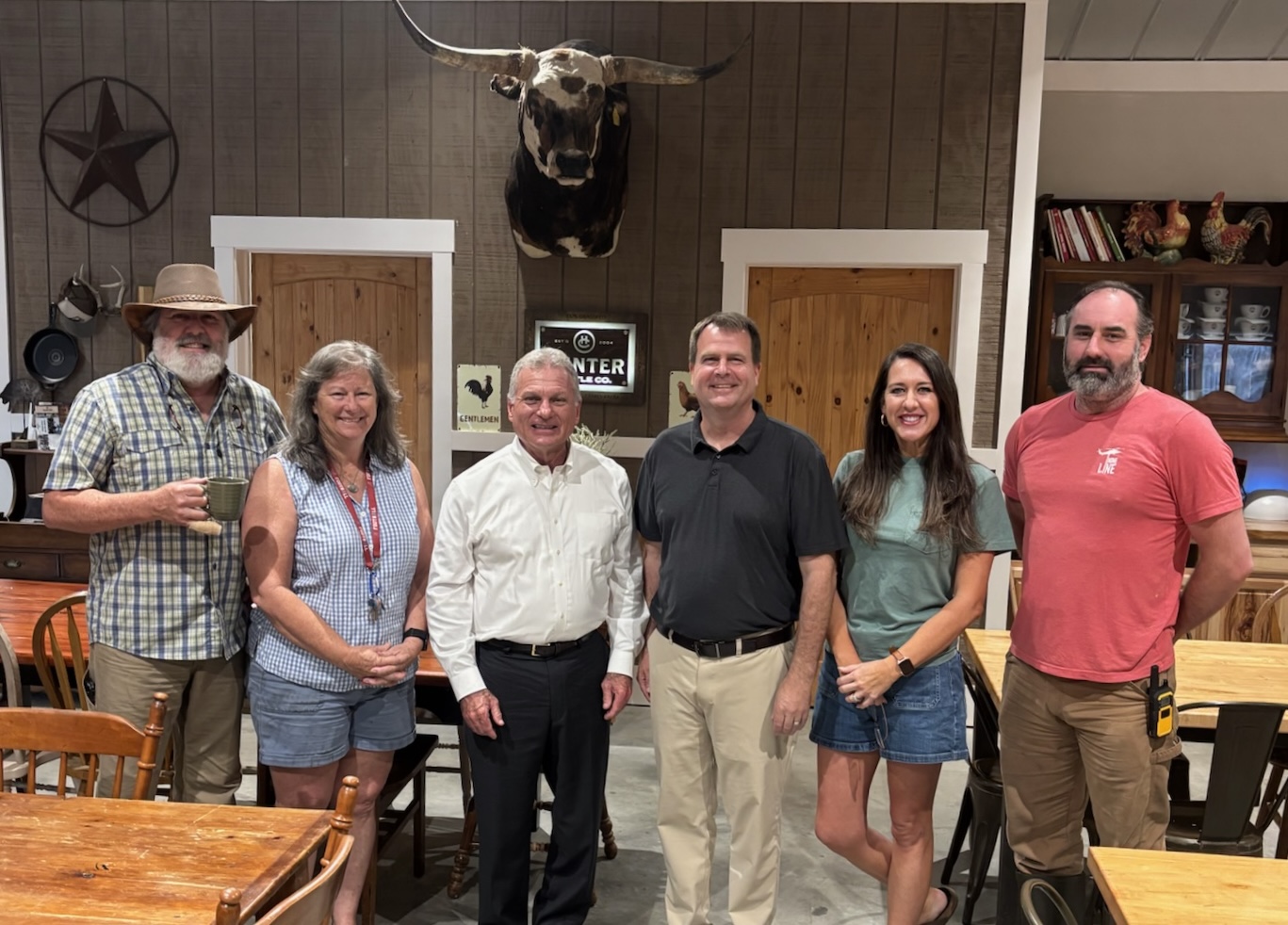
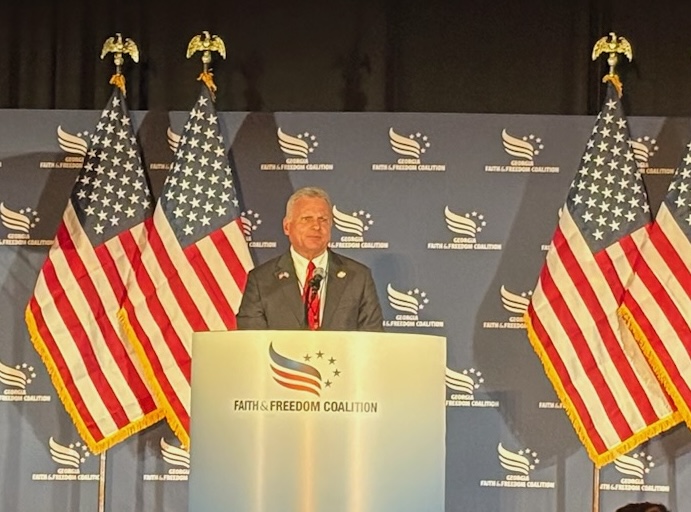
Monday, September 14, 2026: On Saturday, I traveled to Nahunta in Brantley County for the Okefenokee Rural Electric Membership Corporation (OREMC) annual meeting. This electric cooperative powers the lives of over 40,000 residential consumer-members, commercial and industrial accounts in southeast Georgia and northeast Florida. Its service area includes Brantley, Camden, Charlton, Glynn, Ware and Wayne counties in Georgia, as well as Baker and Nassau counties in Florida. While I was honored to speak at this event, I must admit that, like all the other attendees, I was disappointed that the Krispy Kreme donuts didn’t make it. Yesterday, I traveled to Savannah where I was honored to join the congregants at Bible Baptist Church for a special service honoring our first responder community and remembering the 25th Anniversary of the 9/11 attacks on our nation. I was honored to speak during the service that included a presentation of gifts of appreciation to all first responders and police officers in attendance. I’m back in the Savannah area this morning as I stop by the Folds of Honor Golf Tournament being held at the Savannah Quarters Country Club in Pooler. I was Mayor of the City of Pooler in 2001 when Savannah Quarters opened featuring an 18-hole championship golf course designed by Greg Norman. Folds of Honor is an outstanding organization that provides life-changing educational scholarships to the spouses and children of America’s fallen or disabled military service members and first responders. Since 2007 Folds of Honor has awarded nearly 73,000 educational scholarships and its symbol of a folded flag is a constant reminder of those who have paid the ultimate price for our freedom. Afterwards, I head to Stilson in southeastern Bullock County, where my good friend, Georgia State Representative Lehman Franklin, and I visit my longtime friends, Del and Debra Ferguson, owners of Hunter Cattle Company. Del and Debra are great people and have raised a great family that mostly works in the business. After becoming more and more aware of the industrialized food issues, Hunter Cattle Company wanted an alternative and started raising grass-fed cows. Oldest daughter Kristan describes the learning process as a real challenge and credits good books, good neighbors, and the good Lord for their success. They expanded into raising pigs, chickens, turkeys, and eggs to sell to friends and restaurants and soon opened MooMa’s Farm Store, built a processing facility and began producing products on the farm. In 2013 and 2015, Hunter Cattle Co Pork Sausage was awarded the “Flavor of Georgia Award” in the meat category. After a great visit that included a tour of their sprawling facility, I head on up to the Cobb Convention Center in Atlanta where I am honored to speak at the Faith and Freedom Coalition Annual Gala. The Faith and Freedom Coalition believes that the greatness of America lies not in the federal government but in the character of our people- the simple virtues of faith, hard work, marriage, family, personal responsibility, and helping the least among us. 


Rep. Carter visits Hunter Cattle Company


Tuesday, September 15, 2026: After a very early flight from Atlanta to Washington this morning, I head straight to our weekly GOP Conference meeting where this morning we hear from Vice President J.D. Vance as he gives us his perspective on the upcoming midterm elections. Afterwards, I head to an Energy and Commerce (E&C) Health Subcommittee hearing on several provider access and reimbursement bills before heading to our office where I have a podcast interview on Uncle Sam Finds Peace Through Politics as we discuss youth engagement in politics and how politicians can better connect with young voters. Next, I head to a meeting of the International Association of Drilling Contractors (IADC) to share with them our work on E&C as well as the effect of the conflict in Iran on oil and gas and sea-mining off of the coast of Georgia. Once back in our office, I meet with representatives from the Alliance for Care at Home before having a series of meetings including with our scheduling staff and communications staff. Next, I head to a meeting with my good friends with the Brunswick/Golden Isles (BGI) Chamber of Commerce (COC) who are visiting this week before heading back to our office to meet with our legislative staff. After heading to the House Chamber for our first vote series of the week, I head off Capitol Hill to speak to the Alliance for Pharmacy Compounding (APC) at their annual meeting. Next, I head to another meeting with our friends from the BGI COC before heading back to the House Chamber for our second series of votes.


Rep. Carter speaks at Georgia Faith & Freedom Victory Dinner


Wednesday, September 16, 2026: After heading off Capitol Hill for a meeting with the Healthcare Freedom Fund, I head to a markup in the Budget Committee where we unanimously pass two bills to improve the budget process. Next, I head to an E&C full committee markup and then meet with Bitso, a Latin American digital asset exchange followed by a meeting with the Georgia Credit Unions. Afterwards, I head to the White House where I meet with President Trump to discuss future opportunities within the administration. Once back at the Capitol, I head to the Cannon Rotunda where I have an interview with Gray TV (WTOC-TV) to discuss news of the day as well as announce a $12 million grant that the City of Tybee Island will be receiving for beach renourishment. Once back in our office, I meet with my good friend, Dr. Valerie Montgomery-Rice, President and CEO of Morehouse School of Medicine, before meeting with the Georgia Association of Christian Schools (GACS). After filming this week’s edition of Buddy’s Briefing, I head to the house chamber for our final vote series of the week and afterwards head off Capitol Hill for a meeting with the American Academy of Peptide Medicines (AAPM). 


Rep. Buddy Carter tells WTOC Tybee Island getting $20 million for beach renourishment


Thursday, September 17, 2026: After our weekly Doctors Caucus meeting where we discuss solutions to the surprise billing dilemma we have in medicine, I meet with my good friend, John Eunice, Sr., who serves as executive director of Moody Support at Moody Air Force Base in Valdosta. Next, I have a call with our district director and chief of staff before meeting with Adam Vanek, who is the in-house counsel for Daniel Defense in Black Creek.  


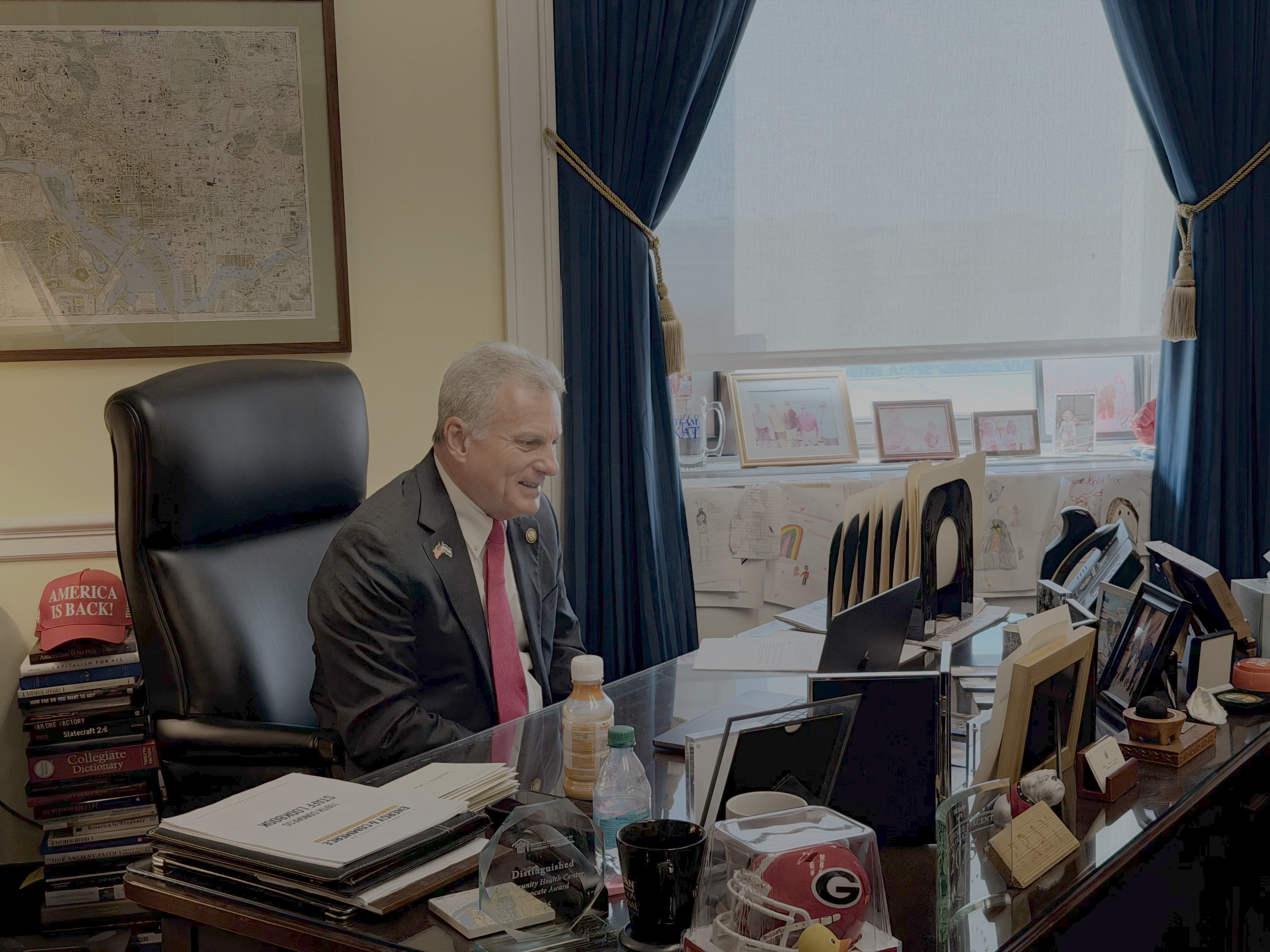
Rep. Carter joins Uncle Sam Finds Peace Through Politics Podcast


Did You Know?


The first major American gold rush happened in Georgia nearly two decades before California. Gold was discovered near Dahlonega in 1828, triggering a rush of prospectors nearly two decades before the famous California Gold Rush. The discovery was so significant that the U.S. government later established a branch mint in Dahlonega.


Votes In The House This Week


Click here to see this week's vote sheet in the House of Representatives.

 
Washington, DC Office
2432 Rayburn HOB
Washington, DC 20515
Phone: (202) 225-5831
Fax: (202) 226-2269
Brunswick Office
777 Gloucester Street
Suite 410
Brunswick, GA 31520
Phone: (912) 265-9010
Fax: (912) 265-9013
Savannah Office
6602 Abercorn Street
Suite 105B
Savannah, GA 31405
Phone: (912) 352-0101
Fax: (912) 352-0105
 
Congressman Buddy Carter. Georgia's first district
 
facebook icon  twitter icon  instagram icon  youtube icon
 
 
Website |  Unsubscribe |  Contact